












An AI centre of excellence does three jobs. It builds the capability of your people, it champions what’s new in AI so the rest of the business doesn’t have to keep up alone, and it finds the use cases that create the most value and spreads them. And it only works if it sits inside the business, not off to one side.
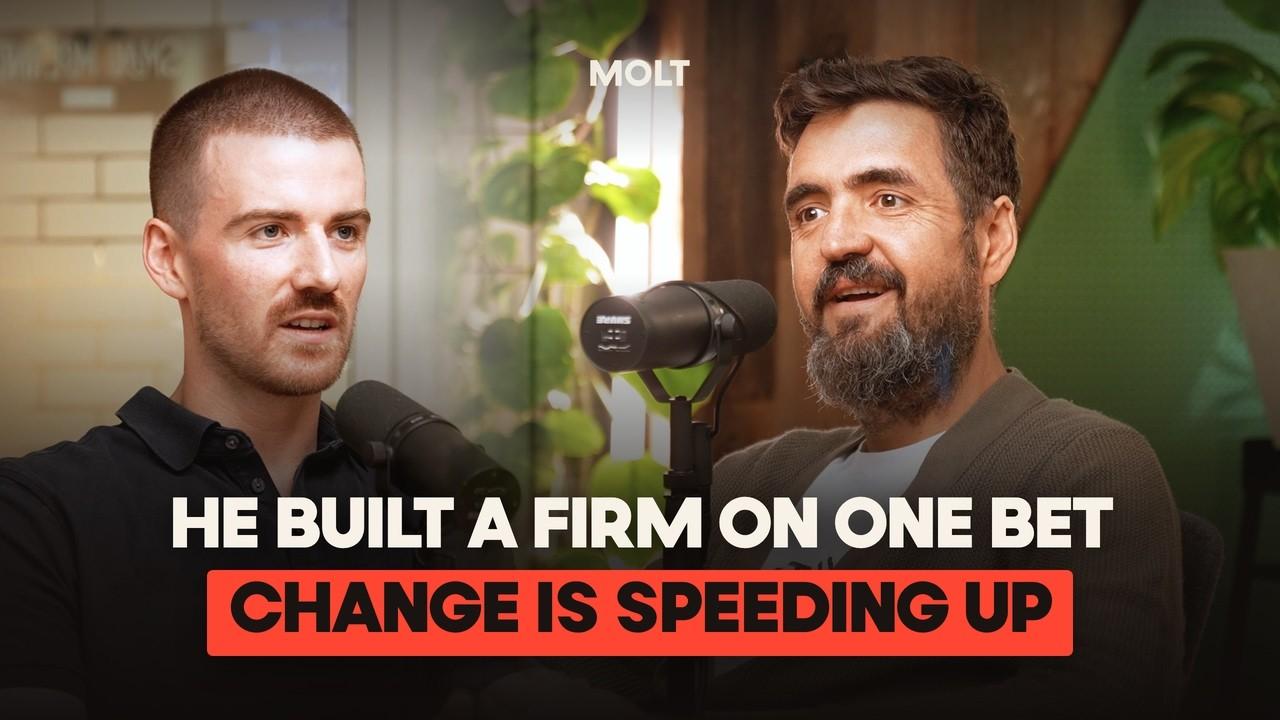
That’s not my framework. It’s Alex Rebkowski’s, Co-Founder and Managing Partner at ADAPTOVATE, who works mostly with very large organisations and laid it out when he joined me on MOLT Conversations. I should say that Alex was my boss for about five years and is now an investor in MOLT, so we’ve spent a lot of time on this problem together. I asked him to explain, in simple terms, what an AI centre of excellence actually looks like in real life.
1. It builds the capability of your people
This comes first for a reason. As Alex put it:
"In order to get value out of AI tools in an organisation, you actually need to build the capability of people."
Lots of large organisations have bought the tools. The licences are there, and what’s missing is people who know what those tools are, how to use them well and how to use them safely. So the first job of a centre of excellence is to close that gap for everyone, not just for the people who were already keen.
2. It champions what’s new
The second job is one Alex’s own team learned the hard way. In his words, "you need someone who is championing the knowledge and everything that’s new with artificial intelligence."
They hit this themselves when they were building a product with AI tools. The tools were changing so quickly that they didn’t know whether to move to each new version, because they didn’t know whether people would be able to use it, or whether it would slow them down or make things faster. That’s a hard call for a single team to make every few weeks, and in a company of thousands, every team is facing it at once.
So somebody has to watch what’s changing, decide what’s worth adopting, and tell everyone else. If nobody owns that, each team either falls behind or works it out separately.
3. It finds the highest-value use cases and spreads them
Alex called this the most important of the three. A centre of excellence should be the place where people initiate the use cases that create the most value, because, as he said, "the biggest challenge in today’s world is whether the investment in AI actually brings the benefits that we were all hoping for." His view is that it does, but a lot of companies are still struggling to prove it.
Two things have to be true for this to work. The people doing it need to be experts in the technology, and they also need domain expertise: they have to know the business well enough to apply the tools to its real processes and products. And once a use case is proven, it has to travel. Getting one team working differently is the easy part, and the value comes when you take what worked and spread it quickly across the organisation.
Why it can’t be an ivory tower
When I played those three back to him, Alex added a fourth point straight away:
"This cannot be done in an ivory tower."
In the past, a centre of excellence often meant a group of people sitting somewhere to the side, in their own world. I joked about the Post-its, and he came back with the ping pong tables. It doesn’t work. The people in it need to be embedded in the business and working on the problems the business actually has. That’s tough to set up, because you want a thin layer that keeps everyone aligned without pulling people away from the work. But it’s also where the learning comes from, because what one team finds out feeds back into what everybody else is taught.
What should you do first, and what should you avoid?
I asked Alex what he’d say if a chief executive rang him on Monday to say they were setting up an AI centre of excellence.
The thing not to do is "go nuts on the tools and spend a lot of money on the tools." It’s very easy to get lost in the tooling, and he thinks you can do more damage to your business than good. There’s also a lot of what his team calls AI theatre: products that tell you they can do something, and once you look under the hood, "it’s not that great."
The thing to do is build a common language around AI, and decide what role it will have in your business. That takes a bit of strategy, which some companies do before they set up the centre and some do after, and either is fine as long as it gets done. Then you build a shared layer of understanding on top of it:
- What the role of AI is in your business
- What you can do with the tools, and what you can’t
- What the guard rails are
- What to do when things go wrong, because things do go wrong with AI
Or, as I summed it up to him: don’t blow the cash on tools, but do spend time working on the common language.
Where training fits
Capability and common language are both, in the end, training jobs. Everyone needs the same foundation, in your own words and with your own tools and rules, and then each role needs to see what AI does for the work in front of them. That’s the shape of the AI literacy training we build: a shared foundation for everyone, then a route for each job family, presented by your own people.
It also has to keep moving, which is the champion’s job turned into something practical. When the tools change, the training has to change with them, and I’ve written about that in how quickly AI training goes out of date. And if you want to know whether any of it is working, pick a measure the business already cares about, as in how to measure the ROI of training.
If you’re setting up an AI centre of excellence and want to talk through the capability side, book a 30-minute call.