








AI is replacing part of consulting: the analysis. Working through large amounts of data and getting to a crisp insight used to take a team of people, and now a company can do it with a prompt. What it isn’t replacing is the harder part, which is getting people to work differently once you know the answer.
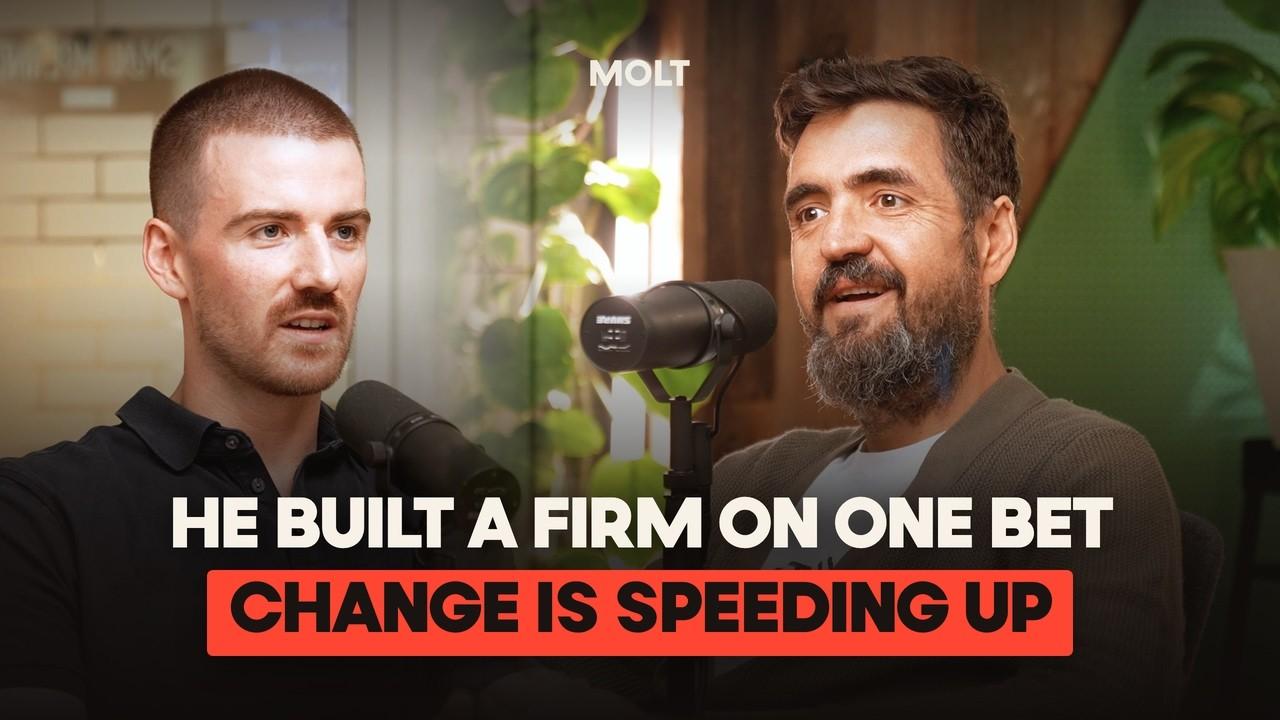
That’s the view of Alex Rebkowski, Co-Founder and Managing Partner at ADAPTOVATE, and he should know. I worked for Alex as a consultant for the best part of five years, and he’s now an investor in MOLT. I asked him about it on MOLT Conversations in August, when the headlines were all about AI replacing consultants. His first response was, “Ben, I thought this was a friendly conversation.”
What is AI replacing in consulting?
Alex didn’t dodge it. “There are certain elements of consulting that previously have been done by humans that are being replaced by artificial intelligence,” he said. He means analytics: understanding large amounts of data and getting really crisp on the insights.
That used to be what you paid a consulting firm for. The big strategy firms work by coming up with a hypothesis and then testing whether it’s true, and that took a lot of manpower. Now, in his words, “that skill set that was unique to consulting firms is being replaced by capabilities that companies can just tap into with a press of a button, or a prompt.”
I saw this for myself before MOLT, when I was still consulting. We had about 20 job descriptions to write for a client going through a large reorganisation. We had a template, some examples of what good looked like, and a load of input on the new roles. So we fed the template and the best example into AI and got it to draft the rest.
It did it in about half an hour. Don’t get me wrong, you still read every job description word for word, and you tweak it and refine it. But that first 75%, where you type away for hours filling out all the detail, had gone. A decent chunk of important work had turned into a couple of days. I remember that moment really vividly.
What isn’t AI replacing?
The part that comes after the insight. Alex’s point is that what hasn’t changed is helping a business implement those insights, and helping people change the way they work to make it happen.
That’s where ADAPTOVATE has always played, which is why he sees this as a great opportunity for them and not a threat. Knowing what to do has got much cheaper, and getting thousands of people to actually do it is as hard as it ever was.
Why has nobody written the playbook for AI?
This was the bit I found most interesting. Alex had been talking to a client the day before about exactly this, and his conclusion was blunt:
“I don’t think anyone has created a gold standard.”
When agile came along, there was scrum. It gave everyone a standard way of doing it, and a consulting firm could turn up and implement it. With AI, he says, that standard isn’t there yet. Everyone is trying to create one, ADAPTOVATE included, but each attempt is focused on specific elements. Nobody has the whole thing.
So if you’re waiting for the proven method before you start, you’ll be waiting a while.
What does it mean for consulting teams?
Alex expects the shape of the work to change for the next two or three years, and maybe longer.
- Smaller teams. He expects to be able to do more with less.
- Fewer junior hires. Experienced people are available in the market, and they’ve already learned the job.
- Shorter, more focused projects. He thinks that, for now, “the time for large transformations is over.”
- More done in-house. A lot of companies are choosing to hire individuals and drive AI internally, buying in specific skills when they need them.
He doesn’t think it stays that way for ever. Once somebody works out the gold standard for these transformations, he expects the bigger programmes to come back.
What happens to the people starting out?
This is the part nobody has a good answer to, Alex included. The analytical work that’s being automated was also the apprenticeship. It’s what you did in your first years so that you understood how the job worked before you did it at a higher level. As he put it, “this was the path to grow.” If those jobs don’t exist, how do you build those capabilities?
So I asked him what he’d say to a 22-year-old version of himself entering the job market in 2026. He’s a father of three, and he’s thought about it a lot.
“Honestly, I have no idea.”
He did have two thoughts. One is that there’s a real need for skilled physical work. He’s renovating a house, and finding a good carpenter is a challenge. The other is that you still have to learn how to think in that hypothesis-driven way, but you’ll learn it differently, using AI, which also lets you learn far more effectively than before.
I feel the same as a parent. It’s almost impossible to know what advice to give our kids. The way we did our jobs five years ago versus now is insane, so how can you predict what it’ll be like in five or ten years’ time? Alex’s answer was that we’re “quite resilient as a species”. This isn’t the first disruption to the workforce and it won’t be the last. It’s the transition that’s hard.
What changes for the rest of us?
It isn’t only consultants. If I think back, 75% of my day was probably the middle bit: typing up the report, making the spreadsheet work, building the slides. The other 25%, or less, was real decision making.
Now the whole day is deciding what needs to happen next and then reviewing work that AI has done. And it is draining.
That’s a new skill, and most people haven’t been taught it. It’s why Alex puts building people’s capability first in what an AI centre of excellence does, and why training only the managers no longer works, which I’ve written about in how to upskill a whole workforce.
If your people have the AI tools and you’re not sure they have the skills, that’s what our AI Academy is for. Book a 30-minute call and we’ll talk it through.