













When ADAPTOVATE lost almost all of its work at the start of Covid, its founders chose not to let anyone go. They showed every employee the numbers, asked people to go part-time, stopped paying themselves, set clear targets for getting back to full pay, and later paid the wages back. It worked, and they came out of it stronger.
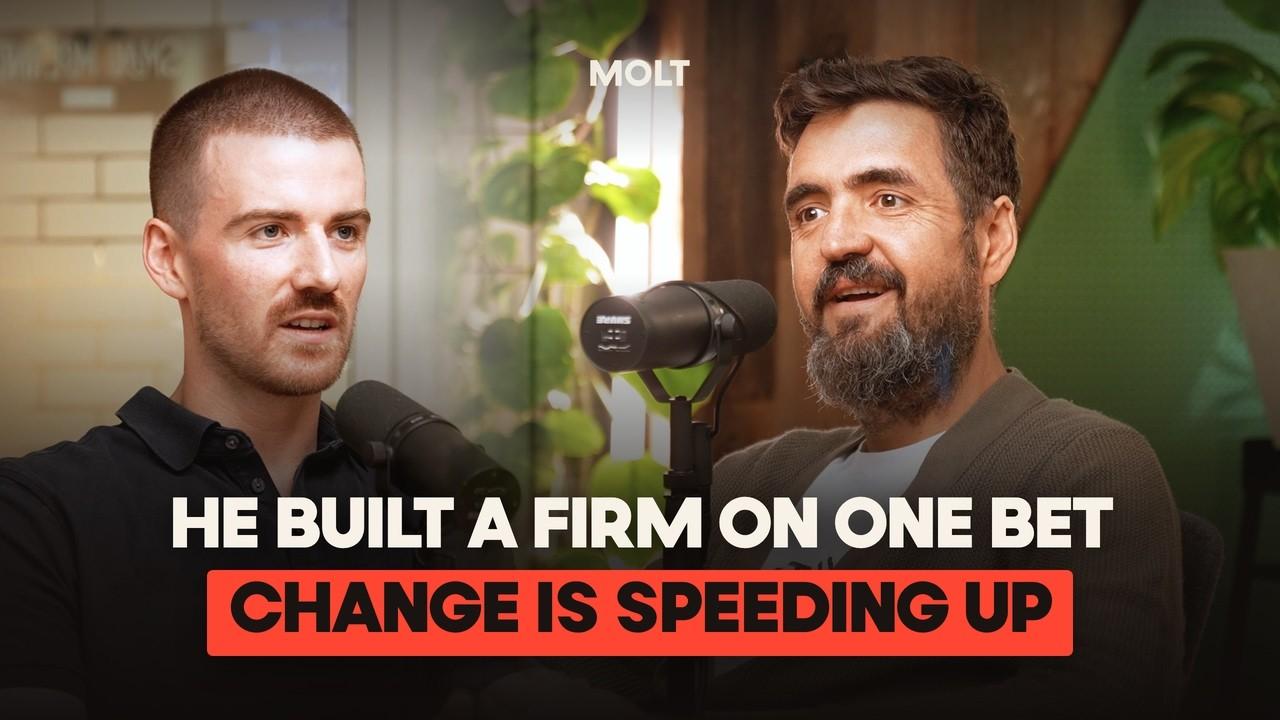
Alex Rebkowski, Co-Founder and Managing Partner at ADAPTOVATE, told me the story on MOLT Conversations. Alex was my boss for about five years and is now an investor in MOLT. I asked him when the business had come closest to not working, and he didn’t have to think about it.
What happened?
ADAPTOVATE had been growing right up until Covid, with a couple of large clients. Then March came, things started to shut down, and their projects shut down too.
They were unlucky with the timing as well. Most of their contracts had an end date in April or May that year, and at that point nobody wanted to renew anything. As Alex put it:
“We found ourselves suddenly in a situation where we had zero business and a quite large payroll.”
They had a cash buffer, because they’d always tried to keep one. What they didn’t know was how long it would need to last.
What was the choice?
There were two options, and Alex laid them out plainly. They could get rid of people, bring the numbers down to something they could manage, and count on growing again later. Or they could take a bet, and try to find a way of keeping everyone.
The case for the bet was that when things improved, that would be the moment to grow, and you can’t grow quickly if you’ve let your people go. He was careful about how he said it, though. He started to say they knew things would get better, and corrected himself: they didn’t know. They believed.
They chose the second option.
What did they actually do?
Four things, and none of them is complicated.
- They told everyone the truth. In Alex’s words, “we were open with all of our employees about what the situation is, how much cash in the bank we have, what we’re proposing to do.”
- They asked people to go part-time, to make the cash last as long as possible.
- They stopped paying themselves.
- They set clear targets. Everyone knew what had to happen, in contracts signed and work sold, for people to go back to full pay.
They cleared the first hurdle around the end of August or the start of September. And then, he said, “by November the market was booming, and we were able to pay back all the wages for people.” People had been working part-time, so in theory that money wasn’t owed. They paid it back anyway.
Why did it pay off?
Because when the work came back, the team was still there. “We actually came out a lot stronger out of Covid,” Alex said, “because we didn’t let go of anyone.” They could jump straight on the growth and the projects that followed.
It’s easy to tell this as a story about being nice, but it was also the better commercial decision. It just didn’t look like one in April.
What did it cost him?
He was honest about this. “That was a time when I did not sleep much,” he told me.
He feels very responsible for his decisions, and this was the point where he understood that those decisions didn’t only affect him and his own family. They affected the families of the 80 to 100 people the business employed. “It did feel like the world is on my shoulders,” he said, and then added that he knows other people would say he had it easy.
I think that’s worth hearing from a founder. The decision turned out to be right, and it was still really tough to live through.
How did he cope with the pressure?
I asked him what he did, practically, to deal with it. His answer was the word he used more than any other in our conversation: alignment.
At work, that meant talking constantly with his co-founders, so that the three of them stayed on the same page. His reasoning was simple: “The moment you start pulling in a different direction, it’s over, and people will see it.”
At home, it meant his wife. At least twice a year, they sit down and talk through what they’re trying to achieve over the next six to twelve months. They talk about everything that matters to them, not just the business, so that they’re pulling in the same direction too. He said that helped him more than anything.
What I take from it
We tend to see the business world as cutthroat, and assume that if you’re not ruthless, you won’t survive. My experience of working for ADAPTOVATE was quite the opposite, and this story is a good example of why.
If I had to boil it down for anyone leading a team through something hard:
- Tell people the truth, with the numbers.
- Take the hit yourself first.
- Say what has to be true for it to end.
- Put it right afterwards if you can.
None of that needs a big company or a big budget. It does need the people at the top to agree with each other, which is probably why Alex keeps coming back to alignment.
There’s more from the same conversation in what an AI centre of excellence does and how to upskill a whole workforce. You can also read a bit more about MOLT and the people we build with.