












To upskill a whole workforce, you can’t rely on training the leaders and hoping it cascades. That worked when a big change took years to land. Now you need people to prove the new way of working, turn it quickly into learning that reaches everyone, and keep adjusting it as things move. For the first time, that’s affordable.
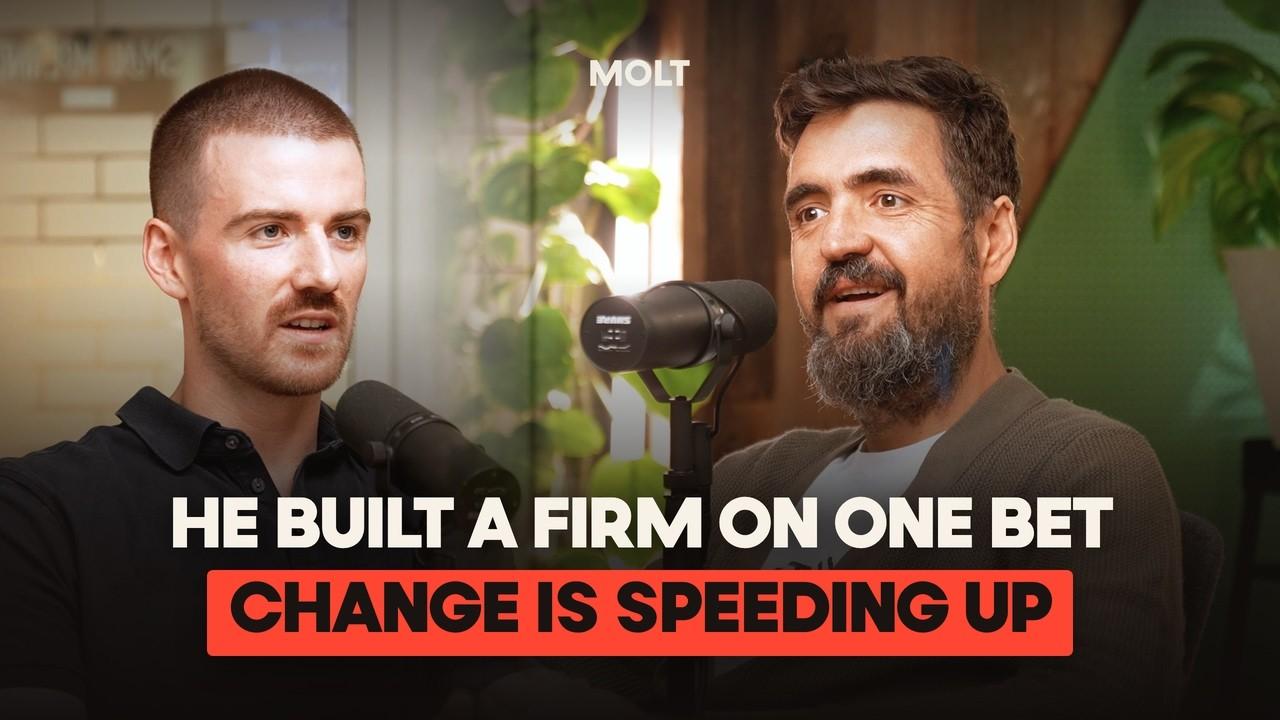
I talked this through with Alex Rebkowski, Co-Founder and Managing Partner at ADAPTOVATE, on MOLT Conversations. Alex was my boss for about five years and is now an investor in MOLT, and this problem is the reason we started working on learning in the first place.
Why did we only ever train the managers?
Because that’s all anyone could afford. I remember it well from my consulting days. If you were doing an operating model redesign for 3,000 people, the client could only afford to train a group of managers, or a pilot group. For everyone else it was a case of: we really hope you understand what we’ve done, and we hope you’re on board with it.
You had to think really hard about where to spend your training budget, and most of the organisation never saw any of it.
Why doesn’t leader-led training keep up any more?
Any large change means building people’s capability. You have to equip them with the right tools, knowledge and skills to do the job differently, and at the scale of a large business you can’t just replace everyone with a new skill set.
Alex’s point is that the old model was built for a slower world. In the agile transformations we worked on, you taught the management, and they went into the organisation and taught everyone else. In his words, "that worked when the cadence of the change lasted for about two, three, five years."
That’s not the cadence any more. With AI and the tools that keep arriving, he says it’s being "compressed to not even months, it’s weeks." Teaching someone takes time, and them going on to teach others takes even more, so by the time a cascade reaches the front line, the thing you were teaching has moved on.
So the question he set out to answer was this:
"What can we do to build those capabilities of people a lot quicker, at a lot larger scale, but also be able to adjust it as things change?"
What’s wrong with the training most people get?
I asked Alex what’s broken about corporate training, and told him he was allowed to be rude. He didn’t hold back: "Oh, boring. It’s boring. It’s outdated."
His example was the one everybody recognises. Compliance training, where the whole idea is "how quickly you can click through it to get to the test", because an email has told you that otherwise your system access will be locked. Friday, four o'clock, as I put it to him.
His more serious point was that for a long time it was really hard to build actual capability through digital learning at all. When he was on a management programme earlier in his career, every piece of training on it was in person. Nobody expected a digital course to change what people could do.
That’s the bit that has changed.
How do people learn a new way of working?
The method hasn’t changed, and it’s simple. As Alex described the way his team has always built capability with clients: "Show them how to do something, and then make them do it and show us and everyone else that they can do it."
What has changed is how people take in content. He’s the first to say he doesn’t love it, but attention spans have shortened, and learning has to cater to how people learn today. So the showing needs to be short and worth watching, and the doing needs to be real. That’s why we both rate teach-back, a feature of Suada, our mobile learning partner, where learners explain what they’ve learned in their own words.
What does upskilling at scale look like now?
Alex describes three things that are true now and weren’t before: it’s affordable, it’s actually decent, and it’s integrated. The third one matters most, because the people haven’t gone anywhere.
"You still need humans to show, to prove that this way is the way to go," as he put it. You prove it and test it with people, then quickly turn that into digital content that reaches everyone, and people adjust that content as they learn what works. He calls those learning loops, and the speed of the loop is the point:
"If you can’t implement quickly, you’re done, because someone else will."
That’s how we work with ADAPTOVATE. They lead the programme and the change around it, and we build the learning: short video lessons, built around the client’s own tools and language, presented by their own people as AI avatars. Because every lesson is built from a script, it can be changed when the work changes, without filming again.
What this looked like at Comarch
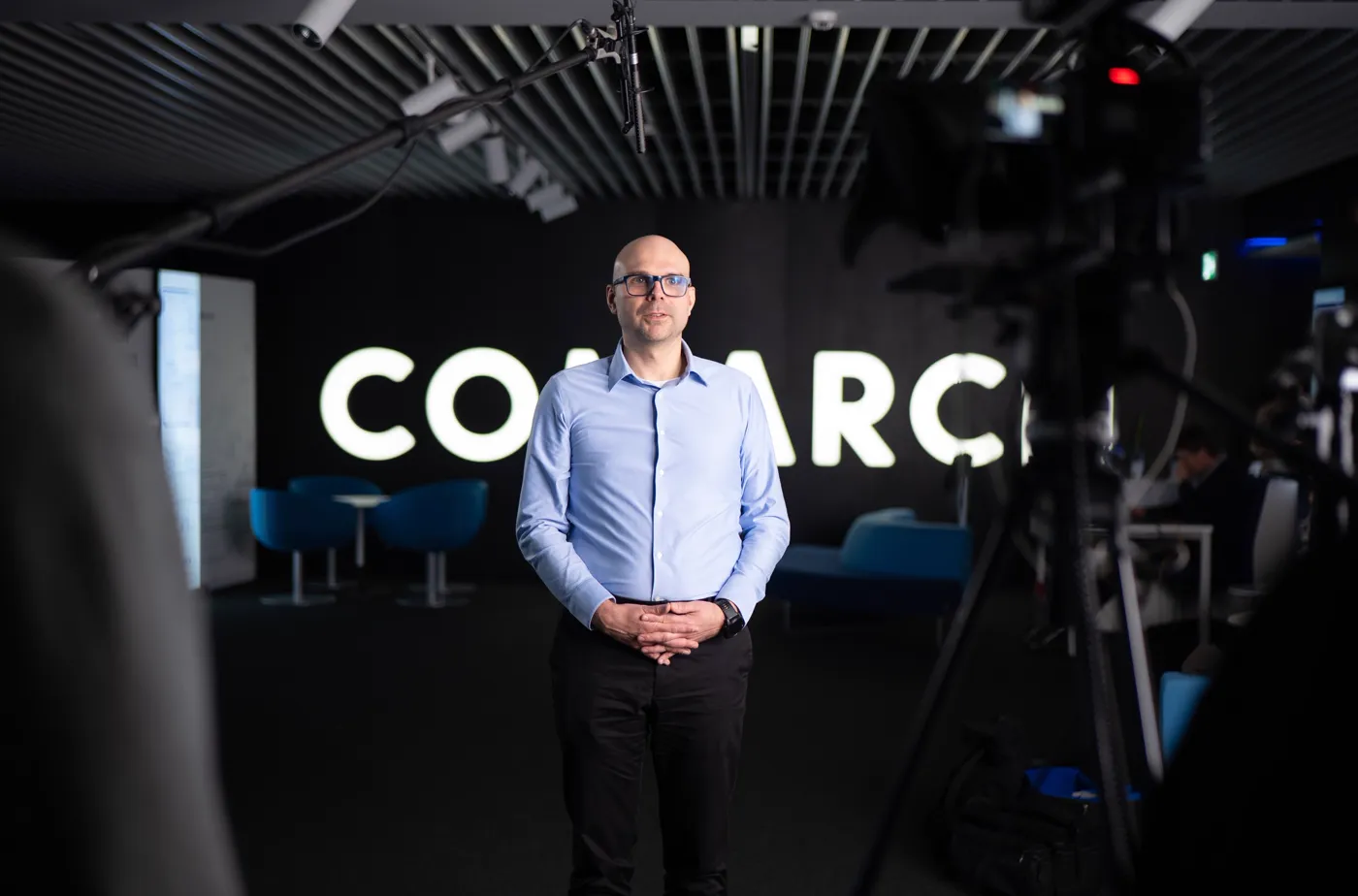
Comarch, a global software company, wanted AI to become part of everyday work for about 5,000 people. That’s exactly the situation where a cascade is too slow.
We built them an AI Academy in English and Polish, with a foundation for everyone and then a track for each of five career families, presented by avatars of their own colleagues. The pilot was live in two weeks. The share of staff using Comarch’s AI tools every day went from 55% to over 95%, with completion at over 98%. It was delivered with ADAPTOVATE, who led the programme and the change around it.
Everyone got the training, not just a pilot group.
Where to start
Start with what needs to change on the job, and for whom. Let people prove it in a small part of the business, then build the learning for everyone from what they found, and expect to update it. If the subject is AI, expect to update it often, which I’ve written about in how quickly AI training goes out of date.
You can see how we build a programme on how it works. If you’ve got a change coming and more people to reach than you can put in a room, book a 30-minute call.