








AI training can go out of date in a matter of months, if that. Most corporate training lasts longer: sales training, general onboarding or customer service will usually hold for somewhere between six and 24 months, depending on how often your strategy, policies, best practice and branding change. Training about AI doesn’t get that long, because the tools it teaches are changing every week.
The day a course goes live it’s probably fine. Give it a little while, though, and it has aged harder than Comic Sans. That’s quite a scary thought if you’ve just paid for an AI course, but it doesn’t have to be, as long as the training was built to be changed.
Why does AI training go out of date so quickly?
Something that is true about AI today may not be true in a month’s time, and unlike most new technology, this one touches everybody. If you weren’t into cryptocurrency you could leave it alone and it didn’t really matter. AI isn’t like that, because everyone’s work is going to change. So the training matters to the whole workforce, and it happens to be about the fastest-moving subject there is.
A lot of the AI training we build is for large companies whose people have AI tools available to them, but don’t necessarily know what those tools are, how to use them well or how to use them safely. Then the tools change. We’ve had clients where we built the training and they later changed their AI tool of choice, and that is happening faster than it used to. Historically a company would say, "We’ve used this tool for 20 years and now we’re going to change." Now it’s, "We’ve used this tool for six months and now we’re going to change."
How long will a training course last?
It completely depends on the content. If you’re teaching someone how to build a house, the methods and the tools aren’t going to change significantly any time soon. If you’re teaching AI or cybersecurity, that space is changing dramatically, so your training is probably going to become outdated quite fast. When we build a course we can usually give an estimate of how long it will hold, and it comes down to how quickly the technology, the law and best practice are moving in that area.
What makes a course out of date?
When we build training we think about its inputs, and there are two kinds. Internal inputs come from you as a business, and you can’t find them in the public domain: your branding, your processes, your internal language and acronyms, and your own products. External inputs come from outside: industry best practice, law and legislation, and publicly available software and its documentation.
A course goes out of date when one of those inputs changes. You switch tools, a law changes, a product is renamed or new faces join the team. None of that is unusual and none of it announces itself, so the course just drifts further from how people really work. That’s why we get really clear on what the inputs are before we build anything, and why we keep watching them once the course is live.
What happens when training isn’t updated?
Traditionally, e-learning gets rolled out, a load of videos get made, and nothing is changed or updated, potentially for years. That’s because updating a course normally means rebuilding it, which is slow and expensive, so most companies just don’t. And the training quietly rots.
You feel it most with new starters. Once a programme is out of date, you either put new people through it anyway and apologise for the parts that no longer apply, or you scrap it and the investment is gone. Neither is a good answer, because the person who joins tomorrow should see the tool that is being used today, not the tool that was being used when the training was written.
How do you keep AI training up to date?
You build it so that changing it is cheap, and for us that starts with the lesson itself. Our lessons run two to five minutes and each one stands on its own, so a change touches one lesson rather than a whole course.
Every lesson is also an AI avatar video. We film each presenter once and, with their consent, turn them into an avatar, so when something changes we change the line in the script. It’s a new line, not a reshoot, and it’s still the colleague your people already know.
The last part is knowing what a change touches. MOLT Studio, our platform, holds a programme as modular building blocks, from the whole programme down to a single line of script. It checks lessons against change outside your business and inside it, and shows exactly which lessons, quizzes and translations are affected, so we make the change once and it carries through everywhere it appears.
We call that idea the Living Curriculum, and the service built on it is Evergreen. Each quarter we review the programme, refresh lessons, add new modules and update the avatars, in every language. It’s a clear, fixed fee each quarter, so you don’t have to worry about a substantial update and the cost that comes with it.
In that sense a course doesn’t really have a shelf life, because it’s being watched and updated the whole time. How often a change actually gets flagged depends on the subject.
What this looked like at Comarch
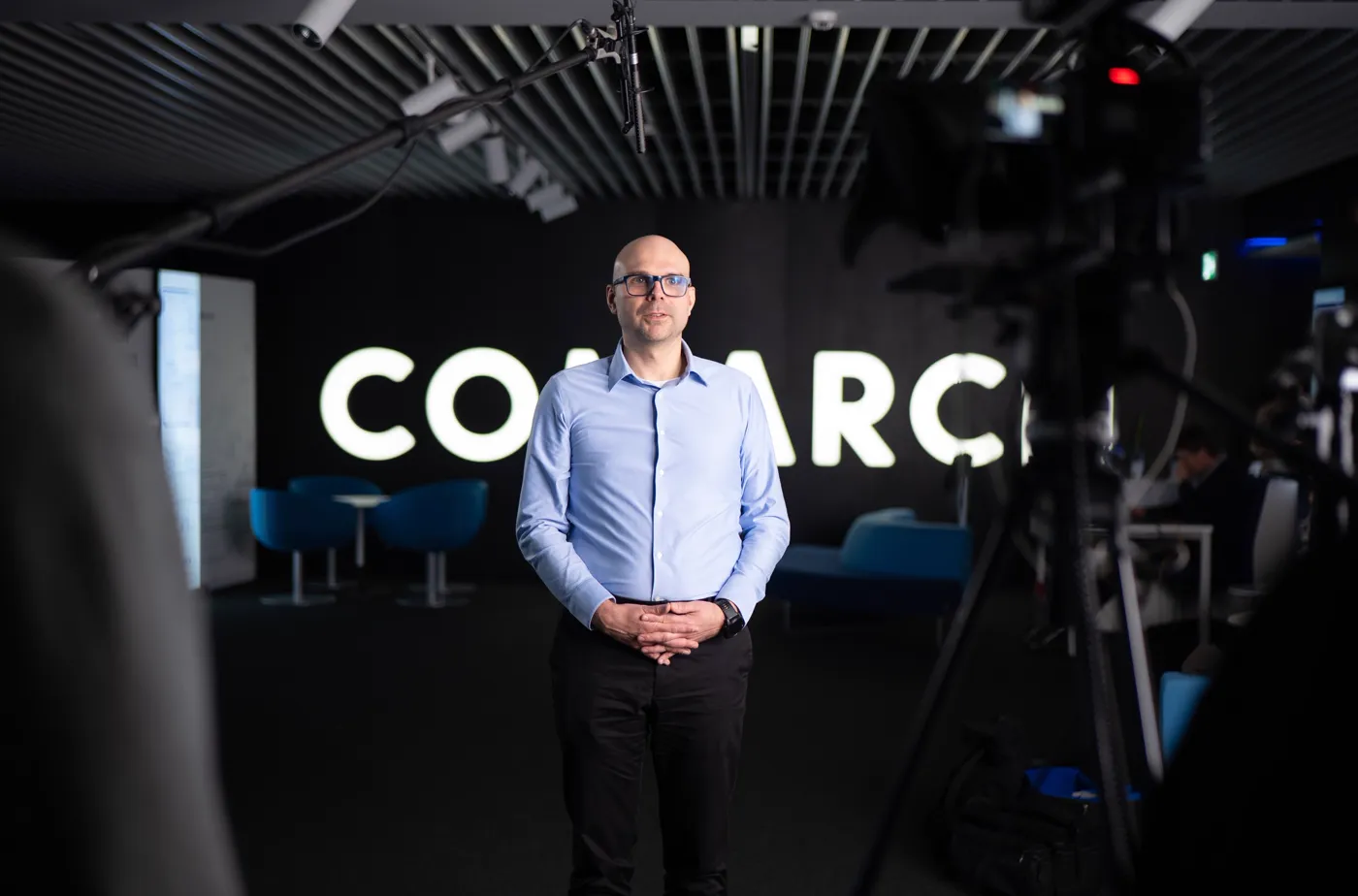
We built an AI Academy for Comarch, a global software company, for about 5,000 people in English and Polish. Two months after launch we were back, because their teams had moved on to newer AI tools, which is exactly what you’d want from a business staying right at the front. So the training moved with them, with refreshed modules, new ones, and updates to the avatars their people already knew, and without starting again.
There’s a short film of that trip: Evergreen: back at Comarch.
Needing to update a course isn’t a failure. It’s the whole point.
Good training shouldn’t sit still. Same course, never out of date.
What to ask before you commission AI training
If the honest answer to "how long will this last?" is "months", then how the course gets updated matters as much as what’s in it on launch day. So there are three questions I’d ask any provider, including us:
- When our tools or policies change, what exactly has to be remade?
- How will we know which lessons, quizzes and translations a change affects?
- Who is watching for change, and how often is the programme reviewed?
Off-the-shelf AI courses teach the tools in general, and they age fast. A course built around the tools you’ve approved, your own policy and your own roles will age too, so what matters is whether anyone is keeping it current. And once it is current, the next question is whether it’s working, which is a different job: how to measure the ROI of training.
If you want to see how this would work on your own content, have a look at our AI literacy training, or book a 30-minute call and bring the tools, the people and the timeline.