











Training doesn’t stick when people can sit through it, tick the box and never have to use it or explain it. It sticks when it’s quick enough to hold their attention, when they have to put it into their own words, and when someone they respect is going to see the result.
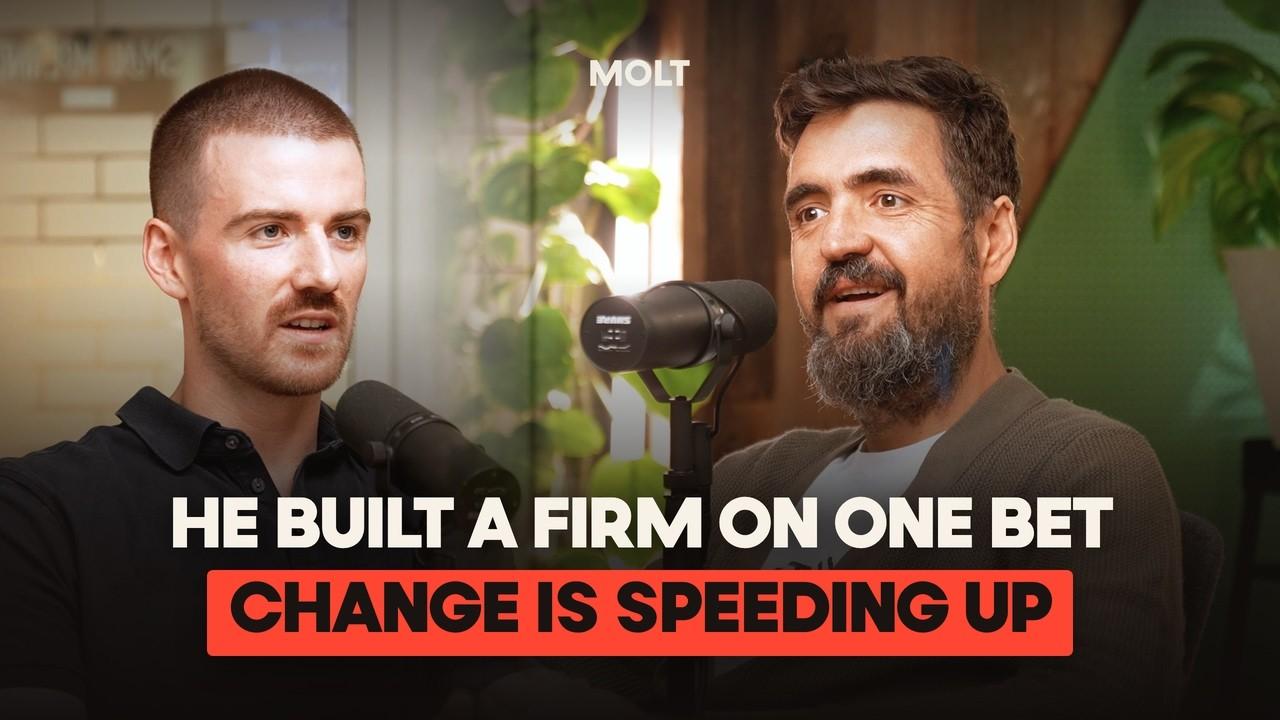
That’s what I took from talking to Lewie Curry, Co-Founder of Suada, our mobile learning partner, on MOLT Conversations. Suada exists because of this exact problem.
“Your workshop was great, but no one’s using it”
Before Suada was a learning platform, it was a sales training company. Lewie and his co-founder ran workshops, and the workshops went well. Then the feedback came in from the sales directors, and Lewie can still quote it:
“Yeah, your workshop was great, but no one’s using it. We’re two months down the line and no one’s doing it. How do you make it stick?”
They tried putting the course on the learning platforms that were on the market, and found the same thing. As he put it, “the training that was being delivered wasn’t getting retained. It wasn’t getting embedded.” People were forgetting it, and nothing in the business was changing.
So they stopped being a sales training company and built the technology themselves.
Why doesn’t training stick?
I think there are three reasons, and they showed up all the way through our conversation.
It’s built to be completed
Lewie spent seven years at M&S, and he remembers his fire safety training well. He’d come off the shop floor, get marched upstairs to the office, sit in a little cubicle at a computer for an hour, tick a box to say he’d done it, and go back to the food hall. “There isn’t anything that’s engaging about that in the slightest,” he said, and it’s a lot of people’s experience of training at work.
It’s too slow
This one isn’t about video at all. I’ve been in physical training seminars, in a real room, where the presenter was so slow and so dull that I switched off completely and ended up leaving. The content might have been fine. It was the pace and the delivery. If it’s too slow and the person in front of you isn’t engaging, you’re gone straight away, whatever the format.
Nothing asks you to use it
Lewie describes the click-next cycle perfectly: it doesn’t matter if I get this one wrong, click, it doesn’t matter if I get that one wrong, tick the box, done. You get to the end of the module and realise you don’t know what you’ve just learned.
What makes training stick?
The answer Lewie landed on came from his own first months in the business. He’d arrived as the video guy, full of ideas about what they were going to film. His co-founder sat him down on day one and said, “Forget the camera, forget your laptop. We need to learn. You need to learn.”
For about three months he didn’t pick up a camera. He was taken through the whole sales process, and then made to teach it back.
That was where he first understood why it works. “By teaching something back,” he told me, “the art of teaching back is not only allowing you to help learn, but it’s helping you retain and also building confidence.” The confidence part is the bit people miss. In his words, “your self image begins to get a little bit re-engineered and you start to think, oh, I know what I’m talking about now.”
It’s an old idea. If you really know something, you should be able to explain it in your own words. Suada turned it into a feature called teach-back: at the end of a module, you record a short video explaining what you’ve learned.
Why does having an audience matter?
Because you don’t want to look daft in front of your peers. Lewie’s point is that when your video is going to be seen by your cohort, even if that’s only three or five people, you feel some social pressure to do a good job. And that changes how you take in the training in the first place. As he said, “it kind of snaps you out of this repetitive cycle of click next training.”
I recognised that straight away, because of my French teacher at school. She put the fear of God into you, because you knew that at any point she might call on you to stand up and speak French in front of everyone. So you did not mess around. I just didn’t want to look stupid in front of my friends.
Social fear sounds like a bad thing, but I think it’s actually quite healthy. At work you depend on the team around you to perform so that you can hit your goals together, so there’s a healthy peer pressure. I don’t want to let you down, and I want to hear what you’ve got to say.
What does that look like in practice?
I saw it for real when we used teach-back with a client. Someone on the team sent me their video, and within about five seconds I could tell they were reading from a script that ChatGPT had written. There was no hiding it.
I had a moment of wondering whether to let it slide. I didn’t. I said, “I want to hear it in your own words. It doesn’t need to be perfect, but I want to hear your take on it, how you understood the content, how you would apply it.” The reply came back: “You caught me. Fair enough.” And the next video was really good.
The other thing that happens is that people start learning from each other. You get a feed of your colleagues explaining things, and the comments start appearing: “I’d never thought about it that way”, or “let’s have a chat about this offline, because I’ve got an idea for our project.” That’s when it has stuck, because people are using it.
How to make your own training stick
You don’t need a particular platform to take the lesson from this. I’d do three things.
- Make it quick. Say it in two minutes if it can be said in two minutes.
- Make people say it back in their own words, to a real person.
- Decide up front what should be different at work afterwards, and check. I’ve written about that in how to measure the ROI of training.
Making training stick is also a change job, which is why we deliver a lot of our programmes with ADAPTOVATE, our transformation and delivery partner.
And be honest about the format you’ve already got. A lot of training that doesn’t stick is click-next content, which I’ve covered in what SCORM is, and whether it’s holding your training back.
If you’d like to see how we build training people choose to watch, have a look at how it works, or book a 30-minute call.